| Question | Explanation |
|---|---|
| What is EPA? | – EPA stands for the U.S. Environmental Protection Agency, a federal agency responsible for environmental regulation. – The key law governing your business is the Clean Air Act (CAA). – EPA regulates emission-related components for both on-road vehicles (cars, trucks) and nonroad mobile machinery (e.g., construction equipment, agricultural tractors, generators, marine engines). |
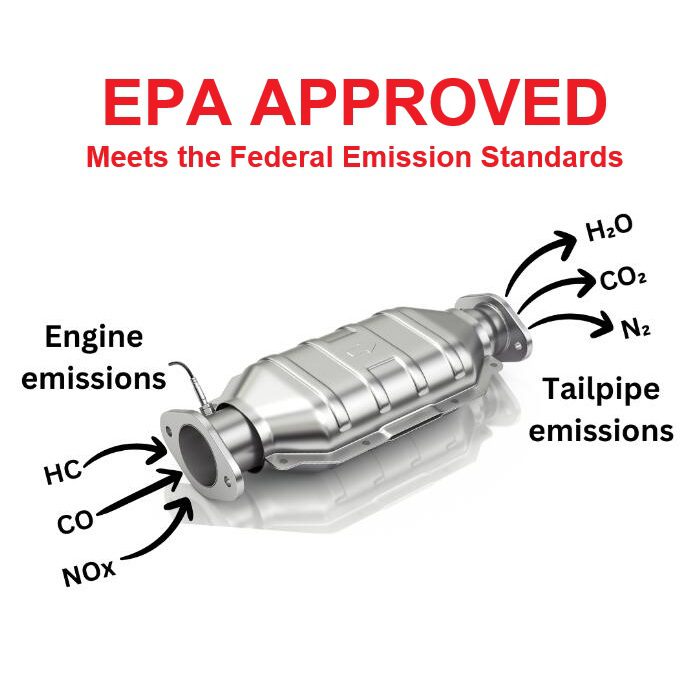
| Which automotive/nonroad parts require EPA compliance? | ✅ Parts that MUST comply (directly affect emissions): • Three-way catalytic converters (TWC) • Diesel/Gasoline Particulate Filters (DPF / GPF) • Exhaust Gas Recirculation (EGR) valves • Oxygen sensors & Air-Fuel Ratio (AFR) sensors • Evaporative Emission Control System (EVAP) components (e.g., charcoal canisters, purge valves) • Complete engines (gasoline/diesel, including nonroad) • OBD-II modules related to emission control ❌ Typically NOT subject to EPA requirements: |
| How to register or apply for EPA compliance? | – Complete engines or vehicles: Manufacturers must submit certification applications via EPA’s CDX system, conduct required testing (e.g., per 40 CFR Part 1065), and obtain an EPA certification number. – Aftermarket replacement parts (e.g., catalytic converters, EGR valves): • If supplied as OEM parts: Covered under the original manufacturer’s EPA certification. • If sold independently: Must apply for a “Replacement Part Exemption”, submitting technical documentation and durability test data. – All submissions must be made through EPA’s official CDX portal—no third-party “certificates” are recognized. – Compliant parts must be labeled with an EPA Compliance Statement and company identification. |
| What is EPA’s regulatory focus and main purpose? | – Primary goal: Reduce harmful pollutants from mobile sources (e.g., NOx, CO, PM, HC) to protect air quality and public health. – Key regulatory focus areas: • Effectiveness of after-treatment systems; • Engine combustion and emission control strategies; • Prevention of fuel vapor (evaporative) leaks; • Prohibition of aftermarket parts that degrade original emission performance (e.g., defeat devices or substandard replacements). |
| What are the consequences of selling EPA-regulated parts without compliance? | – Customs seizure or denial of entry into the U.S.; – Significant fines (up to tens of thousands of USD per violation); – Mandatory recall or destruction of inventory; – Listing on EPA’s enforcement watchlist, jeopardizing future exports; – Potential civil or even criminal liability if violations involve fraud (e.g., fake labels, falsified test data). |
✅ Special Note for Your Business:
– Nonroad engines (e.g., in excavators, tractors, pumps, marine applications) are equally regulated by EPA, with similar requirements for emission-related components.
– Before export, always verify: Does your part affect vehicle/machinery emissions? If yes, EPA compliance is likely required.